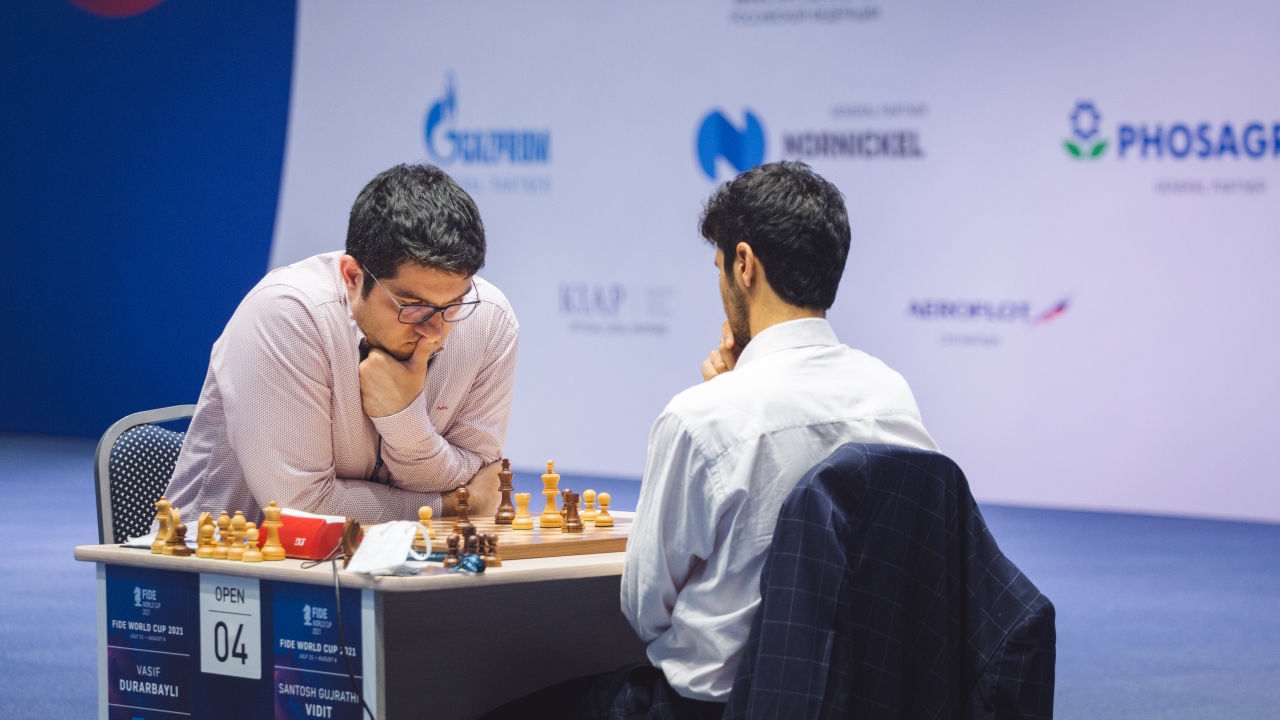
Serious chess players do not follow games only as spectators.
They are watching for opening ideas, recurring structures, changes in an opponent’s repertoire, and positions that may matter in the next round. A live broadcast can be entertainment, but for someone competing in tournaments it is also a form of preparation.
Following and preparing are connected
ChessEver began as a broadcasting app because following events was unnecessarily difficult. But the more I worked on that problem, the clearer the connection became: the game you follow today may be the game you need to study tomorrow.
A serious player might scan several boards, notice a new opening idea, save the game, compare it with earlier examples, and prepare a response before the next round. The value is not just seeing the moves. It is moving from discovery to analysis without losing context.
This is why preparation tools became a natural part of ChessEver rather than an unrelated side project. Broadcasting helps you discover what matters. A desktop workspace gives you the space to investigate it properly.
Stability matters during major events
During the Candidates, we intentionally held back major updates. Software is tricky: every substantial release can introduce new bugs, and a major event is the worst time to disrupt the experience people already depend on.
That decision reflects something I learned both as a player and as a founder. New features are exciting, but reliability is part of the product. During an important round, users need the board, notation, event context, and navigation to work before they need another surprise.
Speed can become a competitive advantage
Players competing in events with two rounds per day have limited preparation time. Saving ten minutes while finding relevant games, switching between boards, or checking an opponent’s recent ideas can matter. The advantage does not come from an engine doing the thinking for you. It comes from spending less time fighting the tool and more time understanding the position.
That is also why desktop matters. A phone is excellent for staying connected to an event. A larger workspace is better for notation, multiple games, PGNs, opening exploration, and deeper analysis. The current ChessEver Desktop page explains how those workflows fit together.
Broadcasting remains the starting point
ChessEver’s core focus is still following chess better. Preparation does not replace broadcasting; it completes the path for users who want to go deeper.
Follow the event. Notice the idea. Open the game. Study the position. Return better prepared.
Adapted from my original post on X, published April 16, 2026. Time-sensitive launch metrics and release claims were omitted; current product details are maintained on ChessEver.