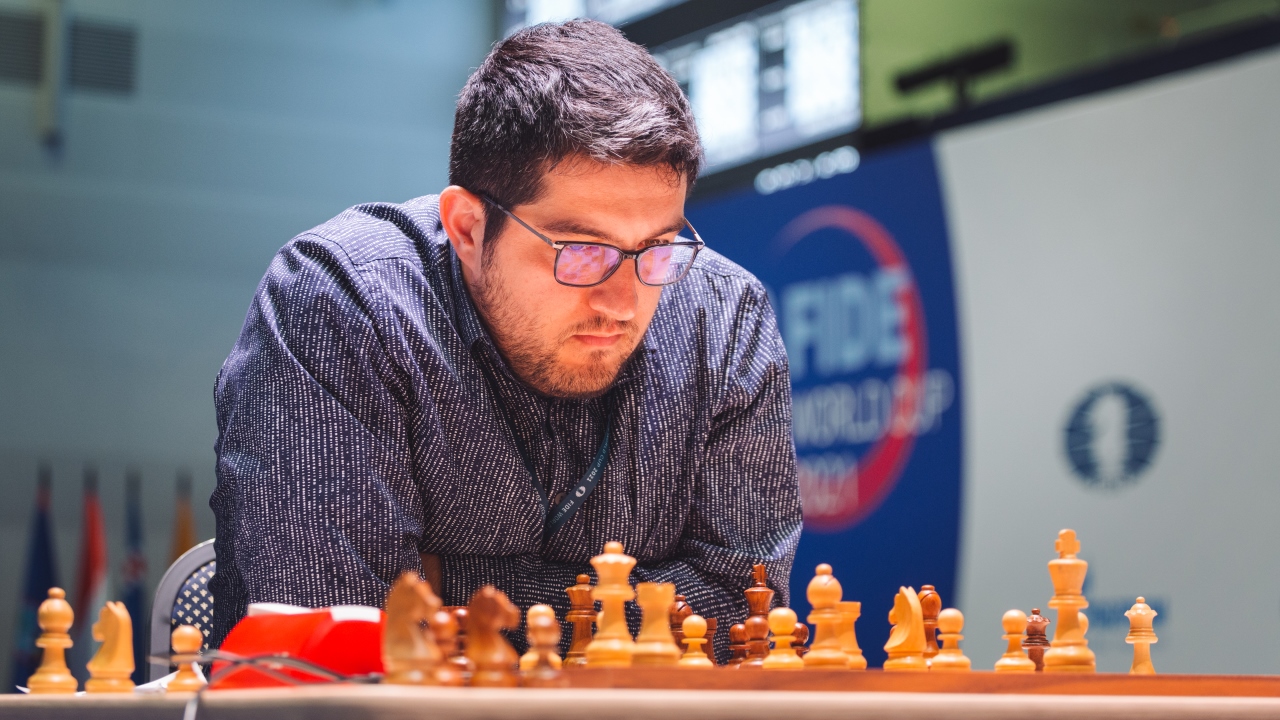
Javokhir Sindarov gave an interesting interview after winning the 2026 Candidates Tournament. The headline version traveled quickly: he did not study the classical champions, he did not read chess books, and he still reached the World Championship match.
That version is close enough to start an argument and incomplete enough to produce the wrong lesson.
Sindarov told Leontxo García that he rarely reads books. He said he had not independently gone through the games of champions such as Capablanca or Botvinnik and had not read Kasparov’s My Great Predecessors. But he also added an important qualification: his coach shows him some of those games at the board. He did not say that knowledge from the classics never reached him. He described a different delivery system.
He also described training camps of eight to ten hours a day, including chess, physical work, and psychological preparation. Somehow that part receives less attention than “I don’t read books.”
A result is not a training experiment
Sindarov is evidence that one extraordinary player can reach the top without following the traditional route in its traditional form. He is not evidence that avoiding books or classical games will improve the average player’s chances.
We do not have a controlled experiment. We cannot take the same child, give him Sindarov’s talent and environment twice, then compare one version that studies Capablanca with another that does not. We see only the successful outcome. We do not see the thousands of players who also avoided structured study and did not become elite.
That is survivorship bias. The visible exception is memorable. The invisible failures disappear from the sample.
This does not make Sindarov wrong about his own development. He is the best source on what he did. It means that a personal history and a general teaching method are different things. Being an authority on playing chess does not automatically make every elite player an authority on how every other person should learn it.
Prodigies can organize knowledge differently
Exceptional talents often absorb patterns from enormous amounts of play, calculation, analysis, and coaching. They may build a coherent chess education without experiencing it as a syllabus. What another player has to name and review deliberately, a prodigy may recognize after seeing it a few times.
Modern tools expand that possibility. A young player can play thousands of online games, analyze positions immediately, search databases, and work with engines from an early age. He can encounter structures that an earlier generation mainly met through books and annotated collections.
But access to more positions is not the same as learning from them. Many players play constantly and repeat the same mistakes. Many solve tactical puzzles and become good at recognizing that a tactic exists, yet still fail to create the conditions for tactics in their own games. Volume helps only when the player can extract, organize, and reuse the lesson.
A prodigy may do much of that naturally. Most players need more structure.
Why established methods still work
Classical games are useful not because old champions were infallible. Engines have exposed mistakes in their analysis and in their play. They are useful because good annotated games isolate ideas clearly.
Capablanca’s games can show how a small structural advantage becomes a favorable ending. Botvinnik’s games can show how opening choices connect to a middlegame plan. A carefully selected game gives a student the position, the mistake, the punishment, and the larger pattern in one sequence. You could learn the same pattern elsewhere. The collection simply makes the lesson easier to see.
Tactical work has a similarly practical purpose. It builds calculation habits and a library of motifs. Analysis of your own games identifies which lessons you actually need. A coach can notice recurring errors that the player has normalized and can choose material at the right level. None of these methods is sacred. They survive because they solve common problems efficiently.
Books are also not the point by themselves. Reading passively is not serious training. If a player learns better at the board with a coach, as Sindarov says he does, that can be excellent. The principle is active study with feedback, not loyalty to paper.
Do not copy the surface
Players often copy the most visible habit of a star. If a champion plays blitz, they play blitz. If a prodigy avoids books, they avoid books. If an elite player studies openings for six hours, they build opening files for six hours. They copy the schedule without copying the conditions that make the schedule work.
Those conditions may include unusual memory, years of early immersion, several coaches, strong training partners, financial support, a carefully built repertoire, and the ability to calculate at a level almost nobody possesses. Remove those conditions and the same routine produces a different result.
The better question is not, “What does this prodigy skip?” It is, “What function is being covered another way?” If he does not read annotated books, does a coach present the same patterns? If he does not solve conventional exercises, does his analysis work demand equally disciplined calculation? If he plays constantly, who helps him correct what repeated play alone does not fix?
Build a plan from your own games
Most players should keep a broad foundation: analyze their games, calculate without moving the pieces, study well-chosen master games, learn essential endgames, maintain an opening repertoire they understand, and get useful feedback when possible. The proportions should change with the player.
A player who calculates well but misunderstands quiet positions needs different work from a player who knows plans but misses forcing moves. A child with exceptional pattern recognition may need less repetition than an adult who started late. A professional preparing for a specific opponent has different priorities from a club player trying to stop losing equal endings.
There is no single correct training plan. Sindarov’s success makes that clear. But “there is no single plan” does not mean “every plan is equally good.” Established methods improve the odds because they address weaknesses that appear across generations and rating levels.
Learn from exceptional players. Study what they do, what they avoid, and how they think. Just do not confuse an outlier’s biography with your instruction manual.